
- 10+ major armed conflicts are currently active worldwide
- 626,000+ estimated total deaths across all active conflicts
- 40 million+ people have been displaced from their homes
- 40+ countries are directly or indirectly affected
- 3 conflicts involve direct major-power military participation
- The deadliest current war is Russia–Ukraine (~350,000+ deaths)
- The newest conflict is Iran–Israel–US, which began February 28, 2026
Sources: ACLED · UN OCHA · Reuters · BBC News · SIPRI — Data reviewed April 2026
Right now, in April 2026, at least 10 major armed conflicts are actively killing people across four continents. Whether you are searching “current wars in the world 2026,” “countries at war right now,” or “how many people are dying in wars” — this article answers every question with verified, sourced data. The world is experiencing its highest simultaneous conflict load since the Cold War era — with three conflicts involving direct major-power military participation, over 626,000 documented deaths across all theatres, and 40 million people displaced. This article compiles every active war, its verified death toll, and what the data tells us about where the world stands.
⚡ Key Numbers at a Glance — All Active Conflicts, April 2026
All Conflicts
Conflicts Active
Displaced
Affected
Major Powers
Spending 2025
SOURCES: ACLED · UN OCHA · SIPRI Military Expenditure Database · Reuters · BBC News
Every Active War — Full Death Count Table (2026)
Verified DataThe table below lists every major active armed conflict in 2026 with military deaths, civilian deaths, total deaths, and the primary source for each figure. Where figures differ between sources, we show the most conservative verified estimate. “Active” means fighting occurred within the past 30 days.
| Conflict | Started | Military Deaths | Civilian Deaths | Total Deaths | Displaced | Primary Source | Status |
|---|---|---|---|---|---|---|---|
|
🇮🇷 🇮🇱 🇺🇸
Iran – Israel – US Conflict
Middle East · 2026
|
Feb 28, 2026 | ~980+ | 95+ | 1,075+ | 100,000+ | Al Jazeera · Reuters | Developing |
|
🇷🇺 🇺🇦
Russia – Ukraine War
Eastern Europe · 2022–Present
|
Feb 24, 2022 | ~335,000 | 15,000+ | 350,000+ | 9M+ | ACLED · UN OCHA · UK MoD | Active |
|
🇸🇩
Sudan Civil War
SAF vs RSF · 2023–Present
|
Apr 15, 2023 | ~120,000 | 30,000+ | 150,000+ | 10M+ | ACLED · UN OCHA | Active |
|
🇵🇸 🇮🇱
Gaza – Israel Conflict
Middle East · Oct 2023–Present
|
Oct 7, 2023 | ~12,000 | 38,000+ | 50,000+ | 1.9M+ | Gaza Health Ministry · UN OCHA | Active |
|
🇾🇪
Yemen Civil War
Houthis vs Coalition · 2014–Present
|
2014 | ~60,000 | 40,000+ | 100,000+ | 4M+ | UN OCHA · ACLED | Active |
|
🇲🇲
Myanmar Civil War
Junta vs PDF · 2021–Present
|
Feb 1, 2021 | ~38,000 | ~22,000 | ~60,000+ | 3M+ | ACLED · AAPP | Active |
|
🇸🇾
Syria: Ongoing Violence
Multi-faction · 2011–Present
|
2011 | ~350,000 † | ~150,000 † | 500,000+ total † | 6M+ | SOHR · ACLED | Active |
|
🇲🇽
Mexico: Cartel Conflict
Armed Groups vs State · 2006–Present
|
2006 | N/A | ~350,000 † | 350,000+ total † | 72,000 missing | ACLED · Mexican Govt. | Active |
|
🇭🇹
Haiti: Gang Conflict
Gangs vs State · 2021–Present
|
2021 (escalated) | N/A | ~4,500/yr | ~12,000 est. | 700K+ | ACLED · UN | Active |
|
🇨🇩
DR Congo: M23 Conflict
Armed Groups · 2022–Present
|
2022 (renewed) | ~5,000 | ~2,000+ | ~7,000+ | 6.9M+ | UN OCHA · ACLED | Active |
| 🌍 Global Total — Active-Phase Deaths, All Conflicts | 626,000+ | 40M+ est. | |||||
⚠ Data Notes: † Syria and Mexico totals are cumulative since conflict start (2011/2006) and are not included in the 626,000+ active-phase total to avoid historical double-counting. All other figures represent current-phase deaths. Military vs. civilian splits are approximate in active conflicts where classification is disputed. Active conflict data is inherently uncertain — treat all figures as best available estimates. Sources and confidence levels vary by conflict.
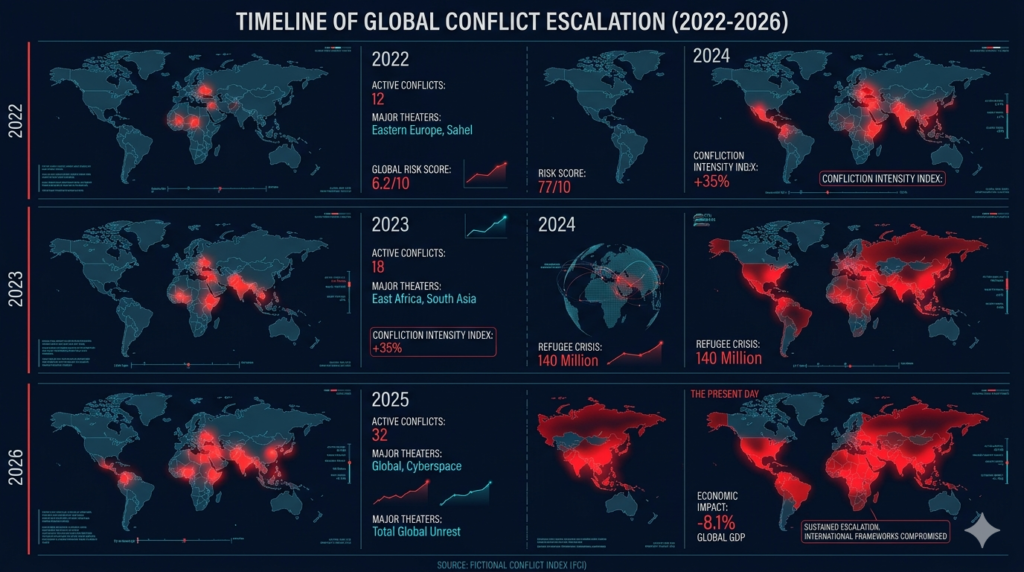
Year-by-Year Breakdown: How the World Got Here
2022–2026The global conflict landscape didn’t reach 626,000+ deaths overnight. It escalated through a cascade of crises, each feeding the next. Here is the exact sequence — what happened, when, and how many people it killed.
The defining event of 2022 was Russia’s full-scale invasion of Ukraine on February 24 — the largest conventional land war in Europe since World War II. NATO countries began supplying weapons at an unprecedented pace. Global food and energy prices surged, destabilizing food security in Africa and the Middle East.
- Feb 24Russia invades Ukraine — 200,000+ troops cross the border. Kyiv besieged. UN Security Council paralyzed.
- Mar–DecMariupol falls (May). Ukrainian counter-offensive retakes Kherson (Nov). ISW estimates 100,000+ Russian casualties by year-end.
- OngoingMyanmar junta intensifies air campaign against People’s Defence Forces. ACLED records 8,000+ conflict events in 2022 alone.
- NovEthiopia-Tigray ceasefire signed after approximately 300,000–500,000 deaths, one of the deadliest recent conflicts outside Europe.
Two major new conflicts erupted in 2023, adding hundreds of thousands of casualties to the global toll. The world was simultaneously managing Ukraine, worsening Yemen, deepening Myanmar — and now Sudan and Gaza.
- Apr 15Sudan civil war begins — Sudan Armed Forces vs. Rapid Support Forces. Within 6 months, 5M+ displaced. Darfur atrocities resume.
- Oct 7Hamas attacks Israel — ~1,200 Israelis killed, ~250 taken hostage. Israel launches Operation Swords of Iron in Gaza.
- Oct–DecGaza bombardment escalates — 25,000+ Palestinian deaths by year-end. Hospital strikes spark global debate over civilian protection.
- Nov–DecHouthi Red Sea attacks begin — targeting international shipping in solidarity with Gaza. US and UK respond with strikes in Yemen.
No major conflicts ended in 2024. The Ukraine war entered its third year of attritional combat. Gaza deaths climbed past 40,000. Sudan’s humanitarian crisis worsened into near-famine. Myanmar resistance forces made significant territorial gains against the junta.
- Jan–DecUkraine front stalemates — Avdiivka falls to Russia (Feb). Ukraine strikes Russian oil infrastructure. 80,000+ additional deaths estimated for 2024.
- Mar–AprUS and UK strike Yemen — over 400 targets hit in Houthi-controlled areas in response to Red Sea attacks.
- Nov–DecMyanmar resistance surges — Operation 1027 leaves resistance forces controlling ~60% of territory. Junta air strikes on civilian areas intensify.
- DecAssad falls in Syria — rebel coalition takes Damascus after rapid offensive. Post-Assad violence continues in 2025–26.
2025 brought renewed tensions between nuclear-armed states. India and Pakistan clashed in the most serious military confrontation since Kargil 1999, following terrorist attacks in Kashmir. Iran’s nuclear programme advanced, triggering red-line warnings from Israel and the United States.
- May 2025Operation Sindoor (India–Pakistan) — Indian strikes on reported terror infrastructure in Pakistan-administered territory. Pakistan responds. Brief, intense exchange before ceasefire. Combined military casualties in the hundreds.
- Jul–DecIran enrichment crisis — IAEA confirms Iran enriching uranium to 84% (near weapons-grade). US and Israel issue formal warnings. Diplomatic talks collapse in November.
- OngoingSudan famine declared — UN declares active famine in North Darfur. 25M+ people face acute food insecurity. Aid access blocked by RSF forces.
2026 opened with the eruption of a direct US–Iran military confrontation — the most significant US engagement in the Middle East since 2003. The conflict began on February 28, 2026, following years of failed diplomacy over Iran’s nuclear programme. Verified casualty figures are still emerging as reporting access to Iran remains restricted.
- Feb 28Iran–Israel–US Conflict begins — US and Israeli air forces strike reported Iranian nuclear sites, IRGC facilities, and naval assets. Reported 2,000+ targets struck in the first 6 days.
- Mar 1–5Iran responds — ballistic missile and drone strikes reported against US military installations across Iraq, Qatar, UAE, Bahrain, and Kuwait. An Iranian Navy vessel was reported sunk in what analysts described as a significant naval engagement.
- Mar 5Senior Iranian leadership casualties reported — multiple sources reported significant Iranian leadership deaths; specific details remain contested and unverified by independent sources. Iran’s command structure is reported to be disrupted.
- OngoingCivilian displacement in western Iran — 100,000+ reportedly displaced. Strait of Hormuz reports of disruption. Global oil prices increased sharply.
The 8 Major Active Wars — Explained
Deep DiveBeyond the raw numbers, each conflict has its own history, causes, and human cost. Here is what you need to know about each active war right now — who is fighting, why it started, and what the data shows.
The most significant direct US military engagement since 2003. Following years of proxy conflict and Iran’s nuclear programme advancing to near-weapons-grade enrichment, the US and Israel launched coordinated strikes against reported nuclear and military sites. Iran responded by targeting US bases across the region. Multiple sources reported significant Iranian senior leadership casualties Contested — specific details have not been independently verified. A significant naval engagement was reported in which an Iranian Navy vessel was reportedly sunk — described by analysts as a notable naval engagement if confirmed. Independent verification of these specific events remains limited due to restricted media access in Iran.
⚠ Why It Matters: First US–Iran direct military conflict. Strait of Hormuz disruption risk. Oil prices +35%. Iranian command uncertainty. Access for journalists restricted — full picture still emerging.
SOURCE: Al Jazeera · Reuters · CBS News · Middle East Eye · IAEA — Note: Some claims from this conflict remain unverified by independent sources
Russia’s full-scale invasion on February 24, 2022 is the deadliest conflict in Europe since World War II. ACLED estimates ~250,000 Russian and ~100,000 Ukrainian combatant deaths. The front line has moved relatively little in 2024–2026, with both sides suffering massive attrition in what military historians compare to WWI-style trench warfare. NATO continues supplying Ukraine with advanced weapons including F-16 jets and Patriot air defence systems.
⚠ Why It Matters: NATO’s largest crisis since Cold War. Nuclear threat rhetoric from Russia. European energy crisis. Global food supply disruption (wheat/sunflower).
SOURCE: ACLED · UN OCHA · UK MoD · ISW · BBC/Mediazona
Often called the “forgotten war”, Sudan’s civil war between the Sudan Armed Forces and the Rapid Support Forces has produced the world’s second-deadliest active conflict with minimal global media attention. Mass atrocities — including systematic violence in Darfur — have been documented by UN investigators. Active famine was declared in North Darfur in 2025. Aid organisations report access blocked by both sides.
⚠ Why It Matters: World’s largest displacement crisis. Active famine. UN investigators documenting possible atrocity crimes in Darfur. Severely under-reported relative to its scale.
SOURCE: ACLED · UN OCHA · Human Rights Watch · Reuters
Triggered by Hamas’s October 7, 2023 attack that killed ~1,200 Israelis and took ~250 hostages. Israel launched one of the most intensive bombardment campaigns in its history. Nearly the entire 2.3M Gazan population has been displaced at least once. The UN describes it as one of the fastest-developing humanitarian crises in modern history. International Court of Justice issued provisional orders on civilian protection. Ceasefire negotiations have repeatedly stalled.
⚠ Why It Matters: ICJ proceedings underway. Humanitarian access severely restricted. Global protest movement. Linked to broader Iran–Israel tensions.
SOURCE: Gaza Health Ministry · UN OCHA · Reuters · ICRC
Yemen’s war entered its 11th year in 2025. The Houthi movement controls the capital Sana’a and has targeted international Red Sea shipping since November 2023 — disrupting global trade. The US and UK have conducted hundreds of strikes on Houthi positions. Yemen faces one of the world’s worst humanitarian crises, with widespread cholera, famine conditions, and near-total infrastructure collapse in many areas.
⚠ Why It Matters: Red Sea shipping crisis. 12% of global trade disrupted. One of the world’s worst humanitarian situations. Longest active conflict on this list.
SOURCE: UN OCHA · ACLED · Reuters · USNI News
Myanmar’s military junta, which seized power on February 1, 2021, has been fighting a coalition of ethnic armed organisations and the People’s Defence Force. In 2024–25, resistance forces made significant territorial gains, capturing major towns. The junta has responded with airstrikes on civilian areas. ACLED ranks Myanmar in the top 4 globally across all conflict indicators.
⚠ Why It Matters: Resistance now controls ~60% of territory per analysts. China backing junta diplomatically. ASEAN unable to act. Civilian massacres documented by AAPP.
SOURCE: ACLED · AAPP · UN OCHA · Reuters
The M23 rebel group controls significant territory in eastern DRC including Goma. DRC has one of the world’s largest displacement crises with 6.9M internally displaced. Over 120 armed groups operate in eastern Congo, competing for control of vast mineral reserves including coltan and cobalt critical for electronics and electric vehicles.
⚠ Why It Matters: Largest IDP crisis globally. Coltan/cobalt supply chains. Rwanda accused of backing M23 by UN experts. 7M+ facing acute food insecurity.
SOURCE: UN OCHA · ACLED · UN Group of Experts
The Western Hemisphere’s deadliest non-declared armed conflict. Nine major cartel factions engage in territorial warfare with each other and Mexican security forces. The conflict produces approximately 28,000 homicides per year. The Sinaloa Cartel internal split in 2024 led to a sharp spike in inter-cartel violence in the northwest.
⚠ Why It Matters: 28,000+ deaths/year. Major fentanyl supply chain. 72,000+ officially missing. State capacity increasingly challenged in several regions.
SOURCE: ACLED · Mexican Government SESNSP · InSight Crime
Death Toll Comparison — All Active Wars
Visual DataBars scaled relative to Russia–Ukraine (350,000+). Shows proportional human cost of each conflict at a glance.
ⓘ Syria (500,000+ since 2011) and Mexico (350,000+ since 2006) omitted from this chart as their totals are cumulative over decades and would distort active-phase comparison. Chart is proportional — full width = 350,000 deaths. Sources: ACLED, UN OCHA, Reuters.
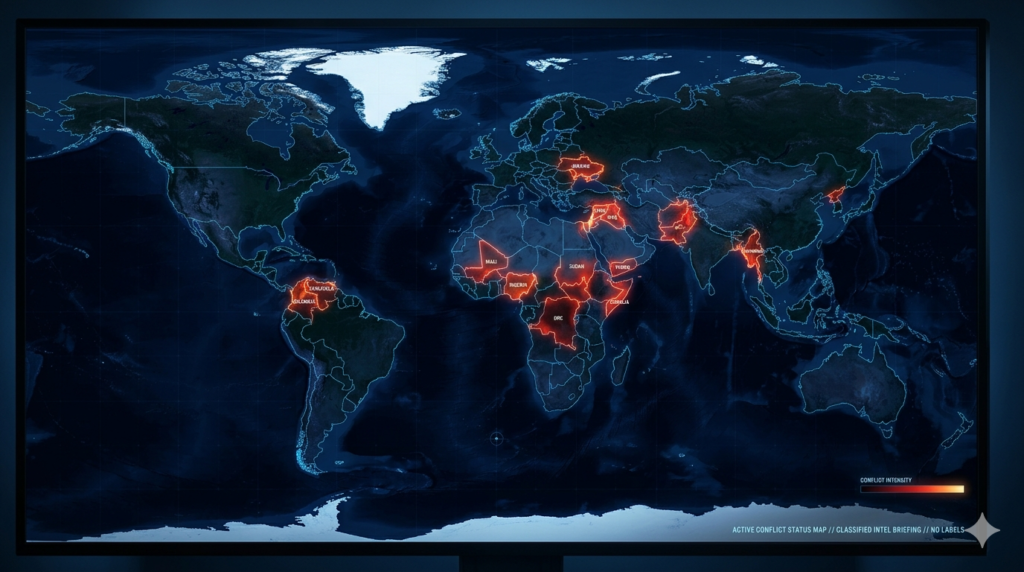
Where Are Wars Happening Right Now? (Global Conflict Map 2026)
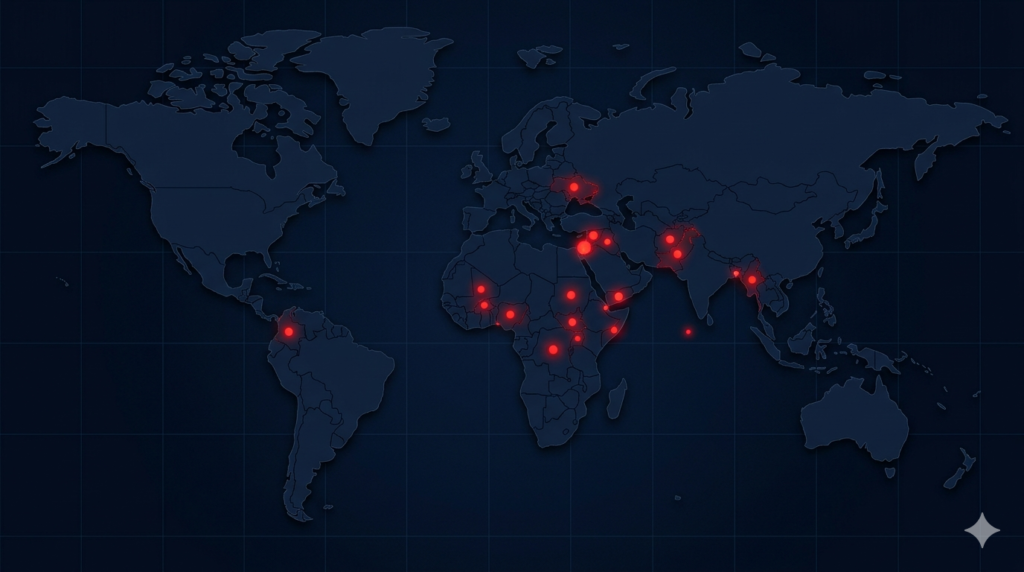
Geographic OverviewIf you are searching for a global conflict map 2026 or wondering which countries are at war right now, this section breaks it down by region. Conflicts are color-coded by current intensity. As of April 2026, active conflict zones span the Middle East, Eastern Europe, Africa, Southeast Asia, and the Americas.
Middle East
Eastern Europe
Africa
Southeast Asia
The Americas
-
🇮🇷
Iran vs Israel + USA1,075+ deaths · Began Feb 28, 2026Active · Developing situation
-
🇵🇸
Gaza — Israel–Hamas Conflict50,000+ deaths · Since Oct 2023Active · 18+ months
-
🇾🇪
Yemen — Civil War + Red Sea100,000+ deaths · Since 2014Active · 11 years
-
🇸🇾
Syria — Ongoing Violence~9,000/year · Since 2011Active · 14 years total
-
🇺🇦
Ukraine — Russia Invasion350,000+ deaths · Since Feb 2022Active · Year 5 · Deadliest in world
-
🇸🇩
Sudan — SAF vs RSF Civil War150,000+ deaths · Since Apr 2023Active · World’s 2nd deadliest
-
🇨🇩
DR Congo — M23 Conflict7,000+ deaths · 6.9M displacedActive · Largest IDP crisis globally
-
🇸🇴
Somalia — Al-Shabaab Insurgency~3,000/year (estimate)Active · Lower intensity
-
🇲🇲
Myanmar — Military vs Resistance60,000+ deaths · Since 2021Active · Resistance gaining ground
-
🇲🇽
Mexico — Cartel Armed Conflict~28,000/year · 350,000+ since 2006Active · Deadliest in hemisphere
-
🇭🇹
Haiti — Gang Conflict / State Collapse~4,500/year · 700K displacedActive · UN mission deployed
-
🇦🇫
Afghanistan — Insurgency~768 documented (2024)Active · Post-US withdrawal
-
🇲🇿
Mozambique — Cabo Delgado~5,000+ total · ISIS-linkedActive · Lower intensity
ⓘ This geographic overview covers major active armed conflicts only. Additional lower-intensity conflicts exist in the Sahel (Mali, Burkina Faso, Niger), Nigeria (Boko Haram), and parts of Central America. Conflict intensity classifications are based on ACLED fatality thresholds. “Critical” = 1,000+ deaths in 12 months. “Major” = 500–1,000. “Significant” = 200–500. Sources: ACLED, UN OCHA, April 2026.
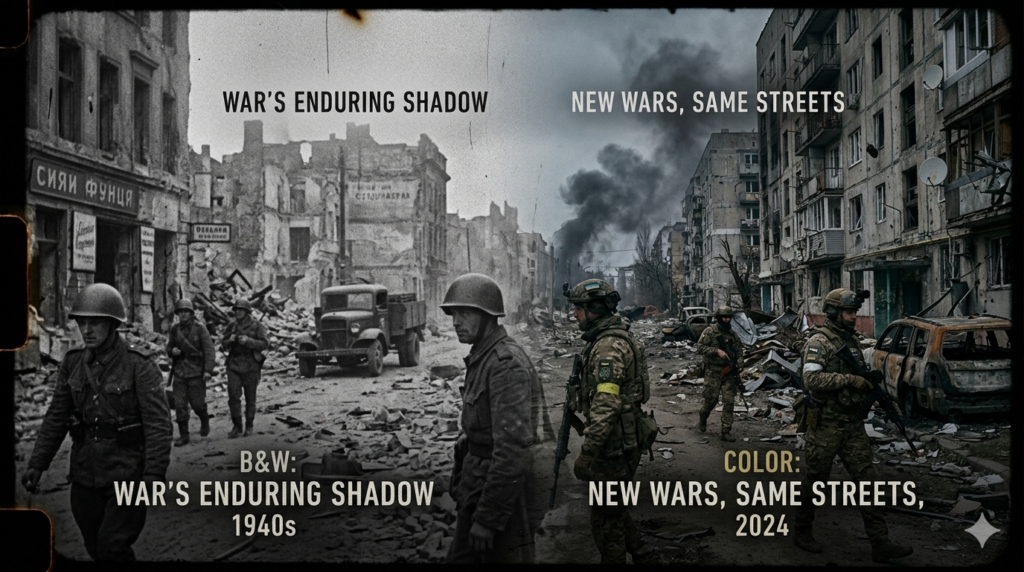
How Does 2026 Compare to History’s Deadliest Wars?
Historical AnalysisKey finding: The combined active-phase death toll of all ongoing conflicts in 2026 (626,000+) is comparable to the entire Korean War — achieved not in a single conflict but across 10 simultaneous theatres on four continents. If current rates continue, 2026 could exceed 800,000 conflict deaths for the calendar year.
Is 2026 the Most Dangerous Period Since the Cold War?
In terms of simultaneous major-power involvement, 2026 represents a notable increase in geopolitical tensions. Three of the world’s most powerful militaries — the US, Russia, and Israel, with China’s indirect involvement through Myanmar — are engaged in active armed conflict at the same time. Most military analysts note this represents the highest level of concurrent major-power military engagement since the Cold War proxy conflicts of the 1960s–1980s, though the nature and scale of those conflicts differed significantly.
Ukraine: Parallels to WWI’s Western Front
Military historians have drawn comparisons between the Russia–Ukraine war and World War I’s Western Front. Both feature entrenched defensive lines with limited movement over extended periods, industrial-scale artillery consumption, emerging drone warfare technologies, and high attrition rates on both sides. At current documented rates, the Ukraine war will likely surpass 400,000 deaths by end of 2026. These parallels are noted by analysts at RAND, ISW, and the UK Defence Intelligence Staff — though each conflict has its own distinct characteristics.
The Iran Conflict: Historical Comparisons
Analysts have drawn comparisons between the 2026 Iran–Israel–US conflict and the 1973 Yom Kippur War in terms of rapid multi-party escalation. The 1973 conflict lasted 18 days and produced approximately 16,000 total deaths. The 2026 conflict has produced 1,075+ documented deaths in its first ~40 days, though reporting access to Iran remains restricted, meaning the full picture is still emerging. The involvement of US forces and the reported targeting of senior leadership — if confirmed — would mark significant departures from historical Middle East conflict patterns. Independent verification of specific claims remains limited.
What the Data Does and Does Not Tell Us
Three factors stand out in 2026 data: (1) Direct major-power involvement rather than proxy arrangements in multiple theatres; (2) Precision weapons technology has changed the tempo and nature of strikes; and (3) Restricted media access in several conflict zones — particularly Iran and Sudan — means current casualty figures likely undercount actual deaths. All figures in this article should be treated as minimum estimates.
Frequently Asked Questions
Most SearchedAs of April 2026, there are at least 10 major active armed conflicts globally: the Iran–Israel–US conflict, Russia–Ukraine, Sudan civil war, Gaza–Israel conflict, Yemen civil war, Myanmar civil war, DR Congo M23 conflict, Haiti gang violence, Mexico cartel conflict, and ongoing violence in Syria. Combined, these conflicts have caused over 626,000 documented deaths in their active phases.
Countries experiencing active armed conflict include: Ukraine (vs Russia), Iran (vs US and Israel), Sudan (civil war), Gaza/Palestine (vs Israel), Yemen (civil war + US/UK strikes), Myanmar (civil war), DR Congo (vs M23), Haiti (gang violence), Syria (ongoing), and Mexico (cartel conflict). Afghanistan, Somalia, and Mozambique also have active lower-level conflicts. That’s approximately 10–14 countries fighting wars right now depending on how “war” is defined.
The Russia–Ukraine war is currently the world’s deadliest active conflict with an estimated 350,000+ total deaths since February 2022. Sudan ranks second with approximately 150,000+ deaths since April 2023 — a conflict that receives far less media attention proportional to its scale.
Approximately 350,000 people have died in the Russia–Ukraine war since February 24, 2022. This includes ~250,000 Russian combatants, ~100,000 Ukrainian combatants, and 15,000+ documented civilian deaths (UN OCHA). Total casualties including wounded exceed 1.5 million.
Based on ACLED data, approximately 200–400 people die per day in conflict-related violence globally in 2026. This fluctuates significantly by conflict tempo. Sudan and Ukraine together account for the majority of daily documented deaths.
No conflict in 2026 has been designated World War 3. However, the simultaneous involvement of major military powers across multiple theatres represents the highest level of major-power military engagement since the Cold War. Analysts note that while conflicts are serious, they remain geographically contained with no direct US–Russia or US–China military confrontation to date.
On February 28, 2026, the US and Israel launched coordinated strikes against reported Iranian nuclear and military facilities. Iran responded by striking US bases across the region. Multiple sources reported significant Iranian leadership casualties, though specific details have not been independently verified due to restricted media access in Iran. The conflict remains active with 1,075+ deaths documented as of April 2026.
Approximately 150,000+ people have died in Sudan’s civil war since April 15, 2023. Over 10 million have been displaced and 25 million face acute food insecurity. Active famine was declared in North Darfur in 2025. Sudan is the world’s second deadliest active conflict and the most undercovered crisis relative to its scale.
The combined 2026 active-phase death toll of 626,000+ is comparable to the entire Korean War (1950–1953) — achieved across 10 simultaneous conflicts rather than one. It is far below World War I (17M+) or WWII (70–85M+), but the current rate represents the highest simultaneous conflict load in terms of major-power involvement since the Cold War era.
ACLED and the Uppsala Conflict Data Program document over 50 major armed conflicts since 2000, including Afghanistan (2001), Iraq (2003), Libya (2011), Syria (2011), Yemen (2014), Ukraine (2022 full invasion), Myanmar (2021), Sudan (2023), and Gaza (2023), among others. Many pre-2000 conflicts — DRC, Colombia — have continued throughout this period.
✓ Schema.org FAQPage structured data included above for Google rich results eligibility
While the vast majority of readers are geographically far from active conflict zones, periods of elevated global tension consistently drive increases in energy prices, supply chain disruptions, and economic uncertainty that affect everyday life worldwide. Search volume for “emergency preparedness” and “food storage” has increased significantly in the past month as global instability has risen. The following section covers what emergency management professionals recommend — not because conflict is inevitable where you live, but because preparedness is sound practice at any time.
✓ Expert-Recommended Resources
What Preparedness Experts Recommend
FEMA, the Red Cross, and the UK Cabinet Office all recommend maintaining emergency supplies as a general preparedness practice. These are the most widely recommended products by verified preparedness professionals and government agencies — not paid placements.
FEMA recommends 72 hours minimum. Preparedness experts extend this to 30–90 days. Freeze-dried options carry 25-year shelf life and need no refrigeration or electricity.
Clean water is the #1 emergency priority. Gravity-fed filters purify 6,000+ litres with no electricity. Recommended by WHO and Red Cross globally for home preparedness.
Power outages follow geopolitical disruptions. Solar generators provide silent, fuel-free backup power for medical devices, communications, and lighting during extended outages.
Receive emergency broadcasts when phone networks fail. Hand-crank + solar charging means it works without any power source. Essential for maintaining situational awareness.
Military-grade trauma kits include tourniquets, hemostatic gauze, and pressure bandages — recommended by trauma surgeons as the civilian preparedness standard for serious medical emergencies.
Gold and silver have historically maintained value during periods of currency instability and economic disruption. Physical bullion is recommended by financial advisors as a portfolio hedge.
ⓘ AFFILIATE DISCLOSURE: Some links above are affiliate links — WarCasualties.com may earn a small commission if you purchase through these links, at no extra cost to you. All products are selected based on endorsement by FEMA, Red Cross, WHO, or verified preparedness professionals, not paid placement. Replace “YOUR-TAG” with your Amazon Associates tracking ID before publishing.
Data Methodology & Sources
TransparencyArmed Conflict Location & Event Data Project. Real-time event-level conflict data from local partners across 190+ countries. Primary source for battle deaths and incident counts.
United Nations Office for Coordination of Humanitarian Affairs. Official UN civilian death counts, displacement figures, and humanitarian situation reports.
Global wire service. Primary newswire source for breaking conflict developments, pending peer-verification by ACLED and UN monitoring bodies.
BBC’s Mediazona partnership (Ukraine), on-ground correspondents, and international news desk used for cross-reference and breaking situation updates.
Daily Ukraine intelligence updates published as public briefings. Used for Ukraine-specific military assessment data.
Stockholm International Peace Research Institute. Global military expenditure data, arms trade statistics, and conflict trend analysis used for broader context.
Institute for the Study of War. Daily Ukraine battlefield maps and assessments. Used for conflict progress and order of battle analysis.
Regional on-the-ground correspondents across the Middle East. Used for Middle East conflict data, cross-referenced against UN figures.
Active-conflict caution: The Iran–Israel–US conflict (begun Feb 2026) is the newest and least-verified conflict in this database. Media access to Iran is severely restricted, meaning independent verification of specific claims — including reported leadership casualties — has not been fully established. We will update figures as credible sources verify details.
Update Policy: Historical data (concluded conflicts) is static. Developing situations are reviewed as verified data becomes available. Last review: April 2026.
Conclusion: The State of Global Conflict in April 2026
The world in April 2026 is experiencing its most complex simultaneous conflict environment since the Cold War — reflecting increased geopolitical tensions across multiple regions. Ten major armed conflicts are killing hundreds of people every day. The cascading crises — from Russia’s 2022 invasion of Ukraine through Gaza in 2023, Sudan’s civil war, and now the Iran–Israel–US conflict of 2026 — are each driven by distinct political, territorial, and ideological factors.
- 626,000+ deaths have been documented across all active conflicts in their current phases.
- The Russia–Ukraine war remains the single deadliest conflict, now in its fifth year.
- Sudan is the world’s most undercovered humanitarian catastrophe — 150,000+ dead, minimal global media attention.
- The Iran–Israel–US conflict is the most significant US military engagement since 2003 — full details still emerging as access to Iran is restricted.
- Gaza has seen 50,000+ deaths and the displacement of virtually its entire population.
- None of these conflicts show clear signs of imminent resolution based on current trajectory.
These are not just statistics. Every number in this article represents a human life. The purpose of tracking casualty data is not to sensationalise conflict — it is to ensure these situations remain visible to the global public, journalists, and policymakers. Verified data is the foundation of informed public discourse.
Article last reviewed: April 2026 · WarCasualties Research Team · Sources: ACLED · UN OCHA · Reuters · BBC News
Share This Research
Help spread verified data — not misinformation