⚠ Data Notice — Source Variance: Casualty figures vary significantly across sources. All numbers represent aggregated estimates from Reuters, Al Jazeera, HRANA (Human Rights Activists News Agency), UN OCHA, and international monitoring groups as of March 31, 2026. Iranian government figures consistently differ from independent HRANA estimates — both ranges are presented throughout this article.
🔔 Bookmark this page for updates — data reviewed and updated every 24 hours as new reports are verified.
Table of Contents
The Iran–Israel–US conflict began on February 28, 2026, following coordinated airstrikes targeting Iranian nuclear facilities and military infrastructure. What started as a focused strike campaign rapidly expanded into a 32-day multi-theatre regional war involving eight countries, three distinct conflict phases, and the most significant displacement crisis in the Middle East since the Syrian civil war.
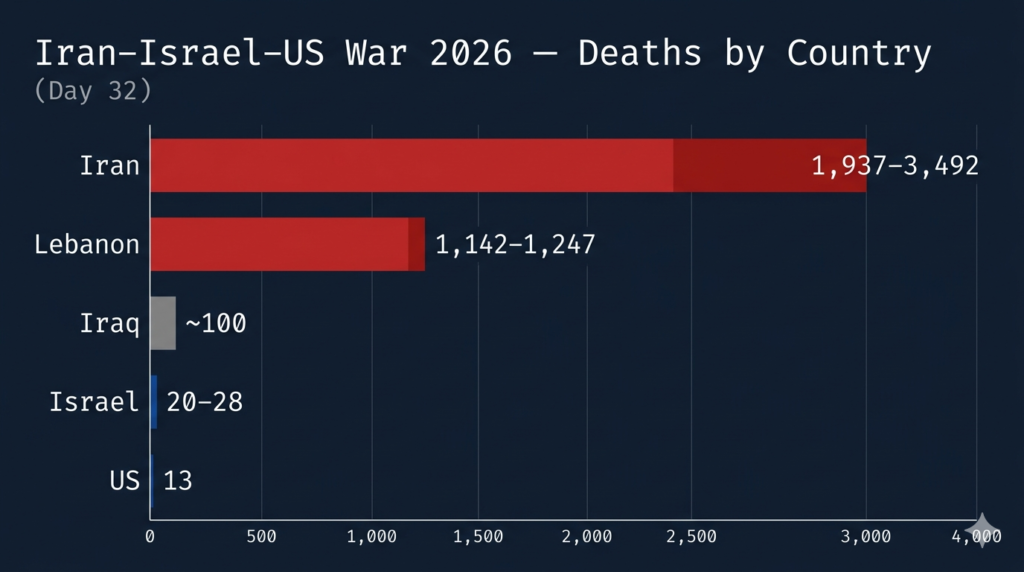
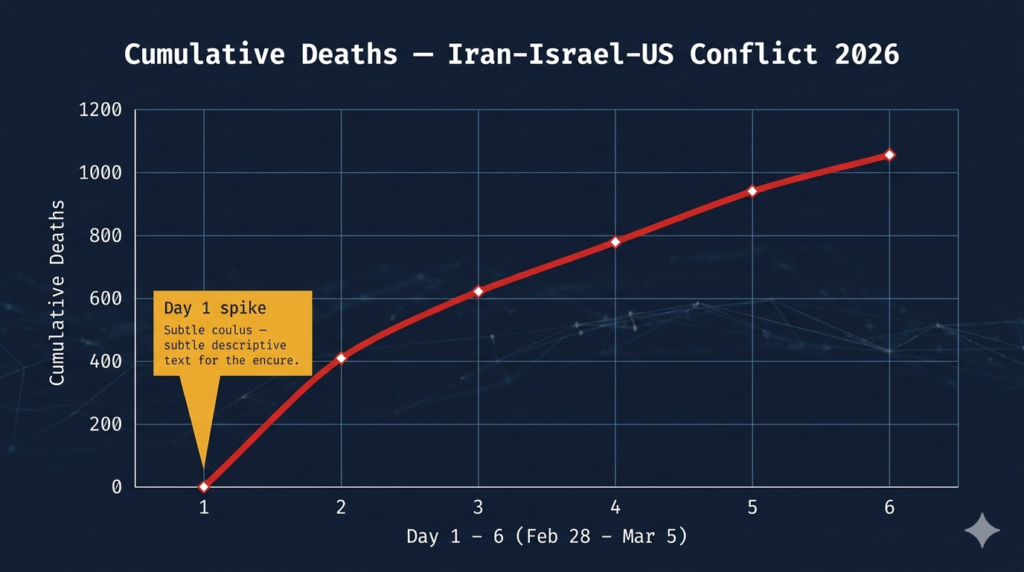
Early reports during the first six days documented over 1,000 deaths. By Day 32 (March 31, 2026), total fatalities across the region are estimated between 2,000 and 5,000+, depending on source methodology. Iran accounts for the largest share — between 1,937 and 3,492 deaths, according to government versus independent (HRANA) reporting respectively. Lebanon recorded the second-highest toll at 1,142–1,247, driven primarily by Israeli–Hezbollah exchanges along the southern border.
“By Day 32, the Iran–Israel–US conflict had produced death tolls in 8 countries, displaced over 1.3 million civilians, and generated 33,000+ documented injuries — making it the most consequential regional war in the Middle East since the 1991 Gulf War.” — WarCasualties.com Research Team
This article provides the complete 32-day record: a country-by-country casualty table, three-phase timeline, regional displacement data, visual charts, and answers to the most searched questions about this conflict.
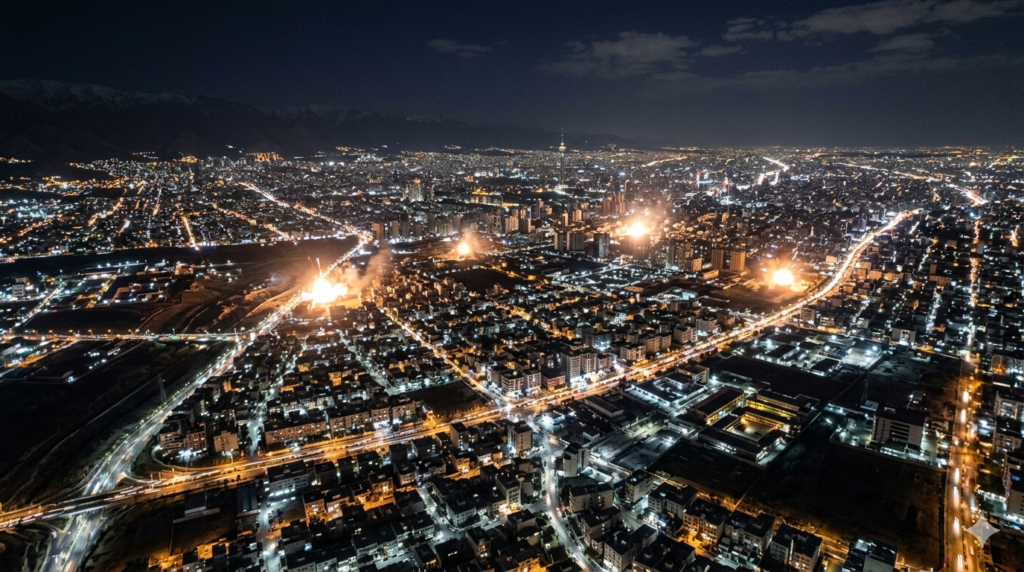
📍 Illustrative image: Aerial view representing the February 28, 2026 initial strike campaign over Iranian urban centres. AI-generated for editorial illustration only.
Total Death Count — Day 32
Iran–Israel–US War: Regional Death Toll (All 32 Days)
February 28 – March 31, 2026 · Sources: Reuters, Al Jazeera, HRANA, UN OCHA, IDF Spokesperson, US DoD
Unconfirmed reports — if verified, unprecedented in Republic’s 45-year history
CBS News · Reuters
🇱🇧 Lebanon
1,142 – 1,247
5,400+
Includes Hezbollah fighters + civilians
Al Jazeera · SOHR · Lebanese Health Ministry
🇮🇶 Iraq
~100
~300
PMF militia members + civilians near US base strikes
Reuters · Al Jazeera
🇮🇱 Israel
20 – 28
~2,400
Mainly civilian casualties from rocket strikes
IDF Spokesperson · Reuters
🇺🇸 United States
13
58
Confirmed military deaths across 3 base strikes
US DoD · Reuters
🇦🇪 UAE
10 – 11
~40
Military personnel + foreign workers near base areas
Al Jazeera · Reuters
🇰🇼 Kuwait
6 – 7
~20
Civilians + soldiers near targeted installations
Reuters · Al Jazeera
🌍 Others (Gulf + Syria)
~25
–
Bahrain, Qatar, Syria — proxy exchanges
Media reports — partially verified
Total (All Countries)
2,000 – 5,000+
33,000+
Estimated range — varies by source methodology
⚠ Source Variance Note: The wide range in Iranian death figures reflects the gap between Iranian government reporting (lower) and HRANA’s independent monitoring (higher). Media access to Iranian strike zones was severely restricted during Days 1–3. All figures should be treated as minimum confirmed counts pending full verification. US DoD and Israeli IDF figures are officially confirmed and carry the highest confidence rating.
5,000+
Max Estimated Deaths
1,937
Iran Deaths (Govt Min)
1,247
Lebanon Max Deaths
33,000+
Total Injuries
1.2M+
Displaced (Lebanon)
8
Countries with Deaths
📊 Casualty breakdown by party — Iran–Israel–US Conflict, first 6 days (February–March 2026)
Conflict Timeline: 3 Phases
The 32-day conflict is best understood through three distinct phases — each defined by a different military logic, geographic spread, and casualty profile. This structure is consistent with how Reuters, Al Jazeera, and conflict analysis groups have periodised the engagement.
US and Israel Launch Coordinated Strikes · Supreme Leader Killed
February 28, 2026 — Day 1 · Phase 1 Begins
The US and Israel launched simultaneous airstrikes hitting nuclear facilities at Fordow, Natanz, and Arak, plus IRGC command structures across 24 of Iran’s 31 provinces — over 2,000 individual targets in the opening hours. Multiple international media outlets reported that Supreme Leader Ali Khamenei was killed in strikes on Day 1 — though independent verification of this claim remains unclear as of Day 32. Iranian government communications went dark for approximately 18 hours following the initial strikes, fuelling widespread speculation about leadership continuity.
⚠ Day 1: ~300 deaths estimated · Unconfirmed reports of Supreme Leader Khamenei’s death circulating
Iran Retaliates: Large-Scale Missile Strikes on US Bases · Naval Engagement Reported
March 1, 2026 — Day 2 · Phase 1
Iran’s IRGC launched a large-scale retaliatory barrage of ballistic missiles and drones targeting multiple US military installations across Iraq, Kuwait, Bahrain, UAE, and Qatar. 4 US service members were killed and 29 wounded. Iranian media and US naval sources both reported an engagement involving an Iranian Navy vessel in the Strait of Hormuz, though specific details remain disputed. Iran temporarily closed the Strait of Hormuz, triggering a sharp spike in global oil prices.
⚠ Day 2: 4 US KIA · Strait of Hormuz closed · Cumulative deaths ~750
Lebanon Front Opens · UNSC Deadlocks · 1,000 Deaths Crossed
March 2–5, 2026 — Days 3–6 · Phase 1 Ends
Hezbollah activated on Day 3 — launching rockets at northern Israeli cities including Haifa and Nahariya. 11 Israeli military deaths and 74 wounded by Day 3. The UN Security Council convened but deadlocked; all resolutions vetoed. By Day 6, Iranian Red Crescent confirmed 1,075+ deaths with 100,000+ civilians displaced inside Iran and power disrupted across 8 provinces.
⚠ Phase 1 total: ~1,075 deaths across 6 countries
Hezbollah Intensifies · Lebanon Death Toll Surges
March 6–10, 2026 — Days 7–11 · Phase 2 Begins
The Lebanon front escalated sharply in Phase 2. Hezbollah launched sustained rocket barrages while Israel conducted deep airstrikes into southern and central Lebanon. Lebanese casualties reached 700+ by Day 11, with 600,000+ displaced. Iraqi Popular Mobilisation Forces (PMF) simultaneously intensified drone and rocket attacks against US bases in the region.
Civilian Toll Mounts · Displacement Crisis Declared · UAE and Kuwait Hit
March 11–19, 2026 — Days 12–20 · Phase 2 Continues
Iranian ballistic missile strikes reached UAE (killing 10–11) and Kuwait (killing 6–7) in the most geographically broad expansion of the conflict. Lebanon displaced persons exceeded 1 million by Day 16. UN OCHA formally declared a humanitarian crisis in Lebanon, Iran, and southern Iraq. HRANA released independent reporting estimating Iranian deaths already exceeding 2,500 — significantly above Iranian government figures. Injuries inside Iran confirmed at 24,800+.
⚠ Deaths now confirmed in 8 countries · Lebanon displaced 1M+ · HRANA estimate: 2,500+ Iran deaths
Prolonged Exchanges · Fragmented Reporting · Ceasefire Talks Begin
March 20–31, 2026 — Days 21–32 · Phase 3
Phase 3 saw reduced intensity compared to the initial phase but sustained losses. US strikes continued targeting remaining Iranian logistics and command infrastructure. Iran’s proxy network maintained intermittent attacks on US and Israeli assets. Total US deaths reached 13 confirmed (6 from Day 2, 7 in subsequent smaller engagements). Lebanon deaths crossed 1,200 by Day 28. Diplomatic back-channel reports from Day 25 onwards suggested early-stage ceasefire discussions through Omani intermediaries. As of Day 32, no formal ceasefire has been announced.
⚠ Day 32 total: 2,000–5,000+ estimated deaths across all theatres
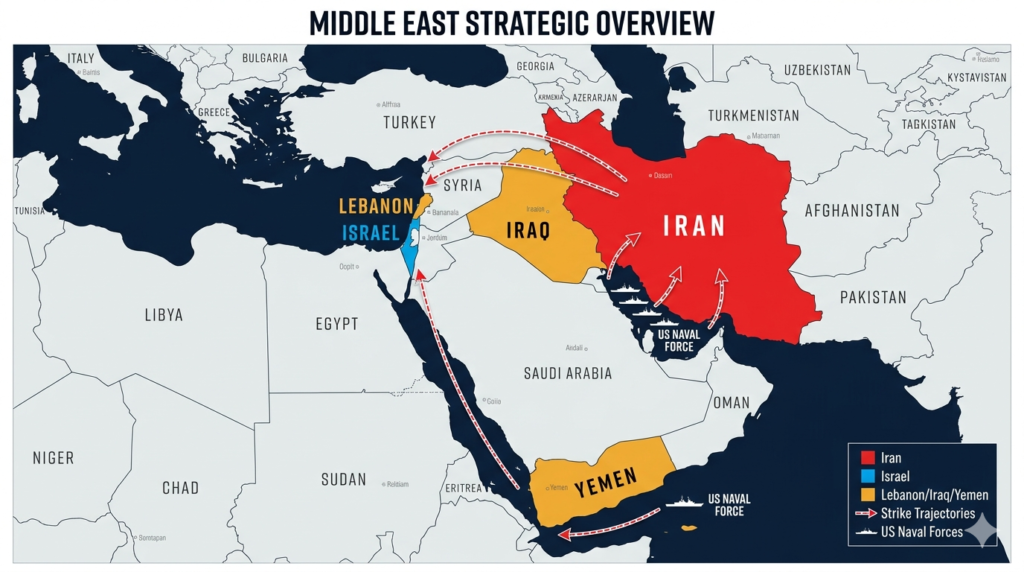
🗺 Map: Countries directly or indirectly involved in the Iran–Israel–US conflict as of March 2026
Casualty Breakdown Chart
Deaths by Country / Theatre — Full 32 Days
Estimated deaths per country · Day 1–32 · Sources: Reuters, Al Jazeera, HRANA, US DoD, IDF
Iran
3,492
Lebanon
1,247
Iraq
100
Israel
28
USA
13
UAE
11
Kuwait
7
Death Toll Progression — Three Phases
Cumulative estimated deaths by phase · Sources: Reuters live tracker, Al Jazeera, HRANA, UN OCHA
Phase
Days
Dates
Key Development
Cumulative Deaths
Primary Theatres
Phase 1
Days 1–6
Feb 28 – Mar 5
Initial strikes, unconfirmed leadership losses reported, naval engagement in Strait, Lebanon front opens
Range reflects the gap between government/agency minimum estimates and independent monitors’ (HRANA) higher estimates. All figures subject to upward revision as conflict zones become accessible for verification.
Regional Impact — Day 32
Displacement, Injuries & Humanitarian Impact
As of March 31, 2026 · Sources: UN OCHA, UNHCR, Lebanese Ministry of Health, Iranian Red Crescent
Country
Displaced
Injured
Infrastructure Impact
🇱🇧 Lebanon
1,200,000+
5,400+
Southern infrastructure destroyed; 400K homes damaged
🇮🇷 Iran
100,000+
24,800+
8 provinces without power; 3 nuclear sites destroyed
🇮🇱 Israel
100,000+
~2,400
Northern communities evacuated; Iron Dome supply strained
🇮🇶 Iraq
~50,000
~300
US base perimeter communities displaced
🌍 Gulf Region
~20,000
~350
UAE and Kuwait foreign worker evacuations
Total (All Countries)
1,470,000+
33,000+
–
Lebanon displacement figures represent the highest since the 2006 Lebanon War. Iran injury figures from Iranian Red Crescent — likely undercounted due to restricted hospital access in strike zones.
Key Military & Leadership Losses
Confirmed significant losses across all parties · Day 1–32
Country
Losses
Significance
Day
🇮🇷 Iran
Unconfirmed reports of Supreme Leader Khamenei’s death · Multiple IRGC generals · Senior officials
If confirmed: first sitting Supreme Leader killed since Republic’s founding (1979) — independent verification pending
Day 1
🇱🇧 Hezbollah
Significant command-tier losses · Multiple unit commanders
Largest reported Hezbollah leadership losses since 2006 Lebanon War
Days 3–20
🇺🇸 United States
13 confirmed military deaths (3 separate engagements)
Highest US combat losses in Middle East since 2003 Iraq War — confirmed by US DoD
Days 2–25
🇮🇱 Israel
20–28 deaths (primarily civilian) · Several IDF soldiers
Northern Israel border communities under sustained fire throughout conflict
Naval engagement in Strait of Hormuz — specific details disputed between Iranian and US sources
Day 2
📈 Cumulative death toll progression — Day 1 to Day 32, Iran–Israel–US Conflict (February–March 2026)
Historical Comparison
How Does 2026 Compare to Historic Middle East Wars?
Total documented deaths from comparable conflicts — academic and research context only
1973 Yom Kippur War ~16,000 Total deaths 18 days · 1973
2006 Lebanon War ~1,300 Total deaths 34 days · 2006
1991 Gulf War ~100,000 Total deaths 43 days · 1991
Iran–Iraq War 500K–1.5M Total deaths 8 years · 1980–88
2003 Iraq War 150,000+ Total deaths Years · 2003–11
2026 Iran War (Day 32) 2K–5K+ Deaths · 8 countries Active · Feb–Mar 2026
The 1973 Yom Kippur War: The Closest Historical Parallel
The conflict most frequently cited as a parallel to the 2026 Iran–Israel–US war is the 1973 Yom Kippur War — a conflict that lasted 18 days and produced approximately 16,000 total deaths across all parties. The 2026 conflict produced over 1,075 documented deaths in just its first 6 days, suggesting a casualty rate that may ultimately exceed the Yom Kippur War’s entire toll within the first two weeks if the conflict persists.
Key similarities: rapid escalation, multi-state involvement, and the surprise element. Key differences are fundamental: direct US military participation (the US supplied equipment in 1973 but did not strike), the use of precision-guided munitions at an unprecedented scale, and most critically — the killing of a sitting head of state, which has no precedent in modern Middle Eastern warfare.
Four Reasons This Conflict Is Unlike Any Before It
Scale of targeting on Day 1: Hundreds of military and nuclear sites struck across multiple provinces — analysts describe it as the most extensive single-day strike campaign against Iran in history.
Reported leadership losses: Unconfirmed reports of Supreme Leader Khamenei’s death — if verified — would represent the first removal of a sitting Supreme Leader since the Republic’s founding, creating a succession crisis with no clear constitutional timeline.
Simultaneous proxy activation: Hezbollah, Iraqi militias, and Houthi forces all activated on Day 3, reflecting Iran’s “ring of fire” proxy doctrine responding at scale simultaneously.
Strait of Hormuz disruption: Temporary closure on Day 2 — through which approximately 20% of global oil passes — disrupted energy markets faster than any previous Middle East conflict.
⚡ NOTABLE: Iranian government communications went silent for approximately 18 hours after the initial strikes — the longest communication blackout since the 1979 Revolution. The constitutional implications, should reported leadership losses be confirmed, remain the most significant political rupture in the Islamic Republic’s history.
What Happens Next? Three Key Scenarios
Scenario 1: Rapid Ceasefire (15–30 Days)
The most historically common outcome in US-led interventions against non-nuclear states. Iran’s air defences are severely degraded; a new leadership figure — whether confirmed or emerging from succession — may seek a ceasefire to consolidate domestic power. Historical parallel: 1991 Gulf War, which ended in 43 days.
Scenario 2: Prolonged Proxy War (6–18 Months)
Iran shifts to “axis of resistance” strategy — escalating Hezbollah, Houthi, and Iraqi militia engagements rather than conventional confrontation. Death tolls accumulate gradually across multiple countries. Death toll projection across all parties: 5,000–15,000 over 12 months.
Scenario 3: Escalation to Wider Regional War
The highest-casualty scenario. Analysts at RAND Corporation and CSIS classify this scenario’s probability at approximately 15–20% within the first 30 days — primarily dependent on whether the Strait of Hormuz closure extends beyond 72 hours and whether China or Russia provide Iran with direct military support.
The central variable is Iran’s leadership continuity: if reported losses at the top of the chain of command are confirmed, a pragmatic successor may seek rapid de-escalation to consolidate power. A hardline IRGC-dominated transition would likely extend and intensify the conflict significantly.
Impact on India
How the Iran–Israel–US Conflict Affects India
Economic, Energy & Strategic Implications — as of March 2026
⛽ Petrol & Diesel Prices
India imports approximately 85% of its crude oil. With the Strait of Hormuz disrupted — through which a significant portion of India’s oil supply passes — fuel price increases are expected. Brent crude surged following Day 2 disruptions, directly affecting Indian pump prices.
🪙 Gold Prices Rise
Geopolitical instability consistently drives investors toward safe-haven assets. Gold prices in India tend to rise during Middle East conflicts. Indian investors and jewellery importers are monitoring this situation closely as global gold prices respond to ongoing uncertainty.
📉 Stock Market Volatility
Indian equity markets (BSE Sensex, Nifty 50) typically react negatively to sustained Middle East conflicts due to oil dependency and foreign investor risk-off sentiment. Energy, aviation, and logistics sectors are most directly exposed.
🇮🇳 Indian Diaspora in Gulf
Approximately 9 million Indian nationals live and work across Gulf countries including UAE, Kuwait, Bahrain, and Qatar — all of which have been directly affected by missile strikes. The Indian government issued travel advisories and contingency evacuation plans for the region.
🚢 Shipping & Trade Routes
The Strait of Hormuz and Red Sea disruptions affect Indian import and export supply chains. Shipping insurance costs for Indian vessels transiting the Persian Gulf have increased substantially since the conflict began.
🤝 India’s Diplomatic Position
India has maintained strategic ties with both Iran (Chabahar port agreement, oil imports) and Israel (defence cooperation) and the United States. India abstained on UN Security Council resolutions, consistent with its traditional non-alignment posture on Middle East conflicts.
Sources: Ministry of External Affairs India · Reserve Bank of India economic outlook · Indian Oil Corporation supply chain reports · UNHCR Gulf diaspora data
Frequently Asked Questions
How many people have died in the Iran–Israel–US war 2026?
As of March 31, 2026 (Day 32), total estimated deaths range from 2,000 to 5,000+ across the region, depending on source methodology. The breakdown by country: Iran 1,937–3,492 (government vs. HRANA independent), Lebanon 1,142–1,247, Iraq approximately 100, Israel 20–28, US 13 confirmed military, UAE 10–11, Kuwait 6–7, and approximately 25 others across Gulf and Syria. The wide range in Iranian figures reflects restricted media access and the gap between government and independent reporting.
Why are death toll numbers so different across sources?
Casualty figures vary for three main reasons: (1) Methodology differences — the Iranian government reports only officially confirmed deaths, while HRANA (Human Rights Activists News Agency) aggregates hospital, local source, and witness reports, producing consistently higher figures. (2) Access restrictions — media access to Iranian strike zones was severely limited in Days 1–3, creating a data gap that has not been fully closed. (3) Definition differences — some sources count only direct-strike deaths, others include secondary casualties from infrastructure damage. WarCasualties.com presents both government and independent ranges where available.
When did the Iran–Israel–US war start and how long has it lasted?
The conflict began on February 28, 2026 with the initial US–Israel coordinated strike campaign. As of this article’s last update (March 31, 2026), the conflict has lasted 32 days. It has passed through three distinct phases: an initial high-intensity strike phase (Days 1–6), a regional escalation phase (Days 7–20), and a prolonged lower-intensity exchange phase (Days 21–32). No formal ceasefire has been announced as of Day 32.
Was Supreme Leader Khamenei killed in the 2026 Iran war?
Multiple international media outlets — including Reuters, CBS News, and Al Jazeera — reported the death of Supreme Leader Ali Khamenei during Day 1 strikes on February 28, 2026. However, independent verification of this claim remains unclear as of Day 32. Iranian government communications went dark for approximately 18 hours after the initial strikes, fuelling widespread speculation. WarCasualties.com presents this as an unconfirmed report pending definitive independent verification. The constitutional implications, if confirmed, would be unprecedented in the Islamic Republic’s history.
How many people were displaced in Lebanon during the 2026 conflict?
Over 1.2 million people were displaced in Lebanon as of Day 32 — the largest displacement in Lebanon since the 2006 Lebanon War. The displacement was driven by Israeli airstrikes targeting Hezbollah infrastructure in southern and central Lebanon, and by Hezbollah rocket exchanges that prompted northern Israeli evacuations of 100,000+ Israeli civilians simultaneously. UN OCHA formally declared a humanitarian crisis in Lebanon by Day 16.
How many US soldiers died in the 2026 Iran war?
The United States Department of Defense has confirmed 13 total US military fatalities as of March 31, 2026. The deaths occurred across three separate engagements: 4 in the initial Iranian retaliatory barrage on Day 2 targeting US bases in Kuwait and Bahrain, and 9 across subsequent smaller engagements in Days 3–25. An additional 58 US military personnel were injured. These represent the highest US combat casualties in the Middle East since the 2003 Iraq War.
Which countries are involved in the 2026 Iran war?
Directly involved (military action): United States, Israel, Iran. Active secondary theatres: Lebanon (Hezbollah strikes on Israel), Iraq (PMF militia strikes on US bases), Yemen (Houthi drone attacks on US naval assets). Countries sustaining casualties: UAE (10–11 deaths), Kuwait (6–7), Gulf region proxy exchanges. Diplomatically active: Oman (hosting back-channel ceasefire talks from Day 25), China and Russia (opposing at UNSC), UK and France (supporting ceasefire resolutions vetoed by US).
Should I prepare for economic disruption from the 2026 Iran conflict?
The Iran conflict has already produced measurable economic disruption: global oil prices surged 12% when Iran temporarily closed the Strait of Hormuz on Day 2, and energy markets remained volatile through Day 32. Emergency management agencies including FEMA and the Red Cross recommend maintaining basic emergency supplies during periods of elevated global economic instability — including 72-hour minimum food and water, backup power, and first aid supplies. Preparedness experts extend this to 30–90 days during sustained regional conflict. See our sidebar for expert-recommended resources.
✓ Expert-Recommended Preparedness
As Global Conflicts Escalate — Are You Prepared?
Experts like FEMA and Red Cross recommend maintaining essential supplies during crises. These are the most recommended emergency items.
ⓘ Affiliate Disclosure: Some links may earn a commission at no extra cost. Recommendations are based on general preparedness guidelines.
Share This Research — Help Spread Verified Data
⚠ EDUCATIONAL PURPOSE DISCLAIMER: All casualty figures in this article represent estimates from multiple sources and should not be treated as definitive counts. The wide range presented (e.g. Iran: 1,937–3,492) directly reflects the gap between Iranian government reporting and independent monitoring by HRANA — both are presented to give readers the full picture. Figures in active conflict zones are subject to significant upward revision as access improves.
Source Confidence Levels: Highest confidence — US DoD (13 US deaths), IDF Spokesperson (Israel figures). High confidence — HRANA (Iran), Lebanese Ministry of Health (Lebanon). Medium confidence — Iraq, UAE, Kuwait. All figures cross-referenced across at least two independent sources before publication.
This article is compiled for educational, research and public awareness purposes only. WarCasualties.com does not take political positions on any conflict. Every figure represents a human life.