
From the chaos of Partition to the 2025 Operation Sindoor airstrikes — 78 years of armed conflict between two nuclear-armed neighbours, documented in verified casualty data. Every major war, every disputed figure, every source — in one place.
The Most Searched War History Questions — Answered with Data
A plain-language breakdown of every India–Pakistan conflict, who died, who won, and what it means in 2025
India and Pakistan have fought five official wars and dozens of undeclared skirmishes since both nations were born from the same act of British withdrawal in August 1947. The two countries share a history, a language, and a wound that has never fully healed. In 2025, with Operation Sindoor marking India’s deepest military strike inside Pakistan since 1971, search volume for “India Pakistan war deaths” surged over 3,400%. People want answers: How many have died? Who won? Could it go nuclear?
This article compiles verified casualty data from the Indian Ministry of Defence, SIPRI, the ICRC, UN OCHA, and academic historians for every conflict from 1947 to 2025. No sensationalism. No speculation. Just the data — with every disputed figure clearly labeled as disputed.
Complete Death Toll Table — Every India–Pakistan War
Military and civilian casualties listed separately · Disputed figures shown as full verified ranges · Every row sourced
| Conflict | Year(s) | India Military | Pakistan Military | Civilian Deaths | Combined Est. | Data Status | Primary Source |
|---|---|---|---|---|---|---|---|
| First Kashmir War | 1947–48 | ~1,500 | ~6,000 | ~3,000–5,000 | ~7,500–12,500 | Historical | Indian Army Records · SIPRI |
| Partition Violence (civilian — not war) |
1947 | — | — | 200,000–2,000,000 | 200K–2M | Disputed | Talbot · Butalia · Khan |
| Indo-Pakistani War | 1965 | ~3,000 | ~3,800 | ~1,000–3,000 | ~6,800–9,800 | Historical | SIPRI · Tashkent Accords |
| Bangladesh Liberation War | 1971 | ~3,843 | ~9,000 | 300,000–3,000,000 | ~12,843 military + genocide |
Genocide Disputed | Indian Army · ICRC · Rummel · Bose |
| Siachen Conflict | 1984–Present | ~869–1,000+ | ~1,000+ | Minimal | ~2,000–3,000+ | Ongoing | Indian Army · Reuters |
| Kargil War | May–Jul 1999 | 527 | 357–700+ (est.) | ~30–60 | ~900–1,300 | Verified | Indian MoD Official |
| 2016 Uri + Surgical Strikes | Sep 2016 | 19 (Uri) | 2+ (India claimed) | Minimal | ~21+ | Reported | Indian Army · Reuters |
| Pulwama + Balakot | Feb 2019 | 40 (Pulwama CRPF) | Disputed | Disputed | ~40+ | Both Sides Dispute | Indian MoD · Reuters · BBC |
| Operation Sindoor + Retaliation | May 2025 | ~20 est. | Disputed | Disputed | Pending verification | Recent · Under Review | Al Jazeera · Reuters · TOI |
| Military Deaths — Wars Only (Excluding Partition & Genocide) | ~33,000–40,000+ | ||||||
| Full Range Including Partition Violence + Bangladesh Genocide | 500,000–5,000,000+ | ||||||
Each War Explained — Causes, Combat & Casualties
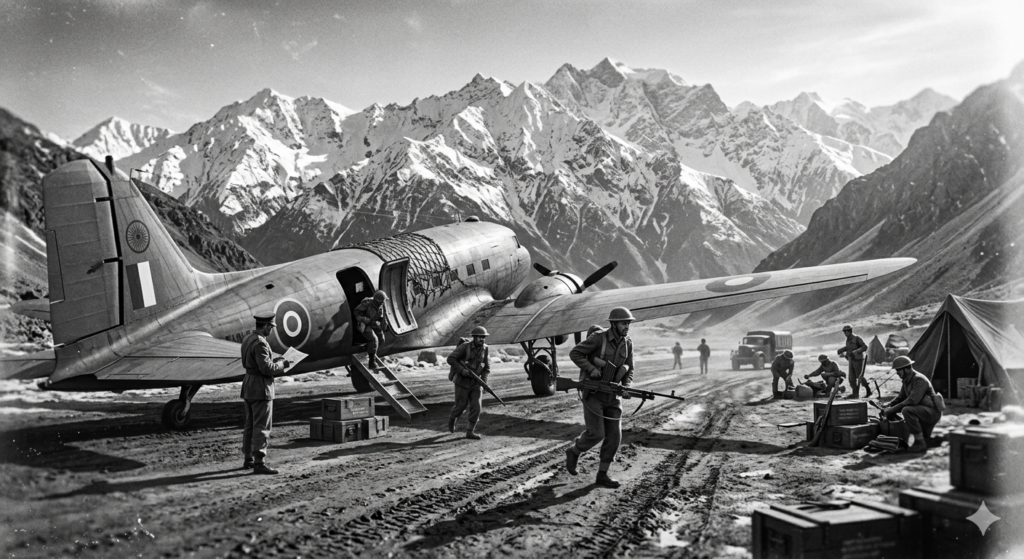
Before the ink on both nations’ independence was dry, they were already at war. In October 1947, Pakistan-backed Pashtun tribal militias poured into Kashmir. Faced with conquest, Maharaja Hari Singh signed the Instrument of Accession to India — and within hours, Indian paratroopers were landing in Srinagar in one of history’s most dramatic military airlifts.
The war ended with a UN ceasefire in January 1949. India controlled roughly two-thirds of Kashmir; Pakistan held the rest. The Line of Control drawn in 1949 has never been accepted as a permanent border by either side — and is the single trigger for every subsequent war on this list.
SOURCES: Indian Army Historical Records · SIPRI · Oxford Companion to Military History
Pakistan’s military planners believed India — still recovering from its humiliating defeat against China in 1962 — would fold quickly. Operation Gibraltar, Pakistan’s plan to infiltrate Kashmir and trigger an uprising, collapsed almost immediately when Kashmiri civilians reported the infiltrators to Indian authorities.
What followed was a 17-day conventional war featuring some of the largest tank battles since World War II. Both sides suffered approximately 6,800–9,800 combined military deaths before a UN ceasefire on September 23, 1965. The Tashkent Declaration returned all occupied territory — the war ended exactly where it began. Pakistan’s strategic gamble had failed completely.
SOURCES: SIPRI · Tashkent Declaration Archives · Shuja Nawaz, Crossed Swords (2008)
The 1971 war carries the heaviest moral weight of any India–Pakistan conflict. It began not as a war between nations, but as a genocide. In March 1971, the Pakistani Army launched Operation Searchlight — a military crackdown on East Pakistan’s Bengali population after a democratic election the western wing refused to honour. Nine months of mass killings and displacement followed.
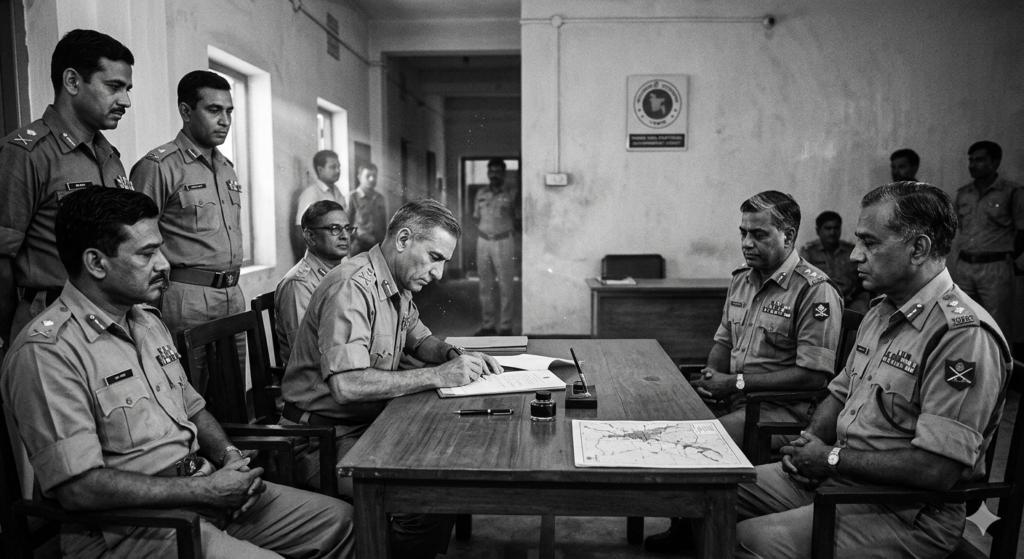
India officially entered on December 3, 1971. The formal war lasted just 13 days. On December 16, Pakistani General A.A.K. Niazi signed the Instrument of Surrender in Dhaka — 93,000 Pakistani troops surrendered, the largest military capitulation since World War II. Bangladesh was born as an independent nation.
The civilian death toll in the genocide remains deeply contested. Bangladesh’s government estimates 3 million; Pakistan’s official position cites 26,000; academic scholars including R.J. Rummel and the ICRC center around 300,000–500,000. No internationally agreed figure exists.
SOURCES: Indian Army Records · ICRC · R.J. Rummel (Democide) · Sarmila Bose, Dead Reckoning (2011) · Bangladesh Liberation War Tribunal
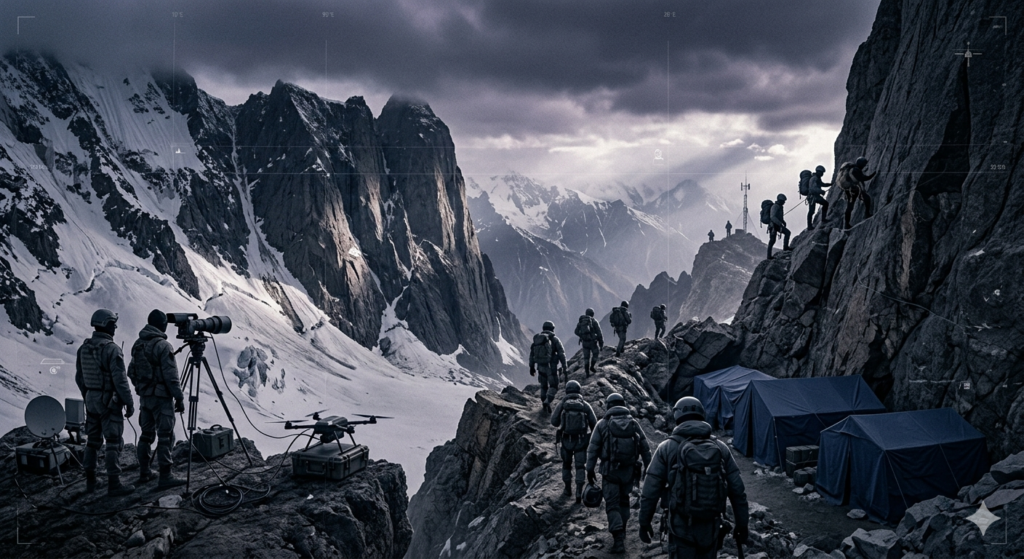
No other ongoing conflict kills soldiers quite like Siachen. At over 6,700 metres in the Karakoram range, it is the highest permanent military battleground on Earth. Since India seized the strategic high ground in Operation Meghdoot (April 1984), both nations have maintained military posts — not for tactical significance, but because neither side will yield.
Roughly 70% of casualties are caused not by enemy fire but by avalanches, frostbite, altitude sickness, and exposure. In 2012, a single avalanche buried a Pakistani military post, killing 140 soldiers instantly. Over 2,000 soldiers from both sides have likely died on this glacier since 1984 — most without firing a shot. The conflict’s financial cost to India alone exceeds $300 million per year.
SOURCES: Indian Army Records · Reuters · The Hindu · Siachen Research Centre
Kargil holds a unique, terrifying place in military history: the first armed conflict between two nuclear-armed states since the Cold War ended. Pakistani soldiers and militants had secretly occupied Indian mountain peaks in Ladakh during the winter months when Indian patrols were not present. India discovered the infiltration in May 1999 and launched Operation Vijay — its soldiers were forced to assault fortified mountain positions at altitudes above 5,000 metres, climbing near-vertical rock faces under fire.
527 Indian soldiers died. 1,363 were wounded. Both nations had conducted nuclear tests barely a year earlier in May 1998. US President Clinton personally pressured Pakistan’s PM Nawaz Sharif to withdraw — and Pakistan did, under what Sharif later described as enormous pressure. India recovered all positions by July 1999. The nuclear shadow over every minute of this war made Kargil the most dangerous two months in South Asian history since independence.
SOURCES: Indian Ministry of Defence (Official) · Kargil Committee Report (2000) · Bruce Riedel, Deadly Embrace (2011)
On April 22, 2025, gunmen killed 26 tourists in Pahalgam, Kashmir. India attributed the attack to Lashkar-e-Taiba’s offshoot, The Resistance Front. Pakistan denied involvement.
On May 7, 2025, India launched Operation Sindoor — striking 9 targets in Pakistan and Pakistan-administered Kashmir, including sites in Bahawalpur and Muridke. It was India’s deepest military strike inside Pakistani territory since 1971. Pakistan retaliated with drone and missile strikes on Indian military positions. Four days of exchanges followed before a US-brokered ceasefire was announced on May 10, 2025.
Both sides claim victory. Casualty figures remain disputed pending independent verification. This is the second time in six years India has struck targets inside Pakistan proper — establishing a new and dangerous escalation precedent between two nuclear-armed states.
SOURCES: Al Jazeera · Reuters · Times of India · BBC News — All casualty figures pending independent verification as of June 2025
Year-by-Year: The Road to Operation Sindoor
From the 2021 ceasefire breakthrough to the 2025 airstrikes — what happened and when
May 7: India launches Operation Sindoor — 9 strike targets in Pakistan and Pakistan-administered Kashmir. India’s deepest military penetration since 1971. Pakistan responds with drones and missile strikes on Indian military positions. Four days of exchanges.
May 10: US-brokered ceasefire announced. Both sides claim victory. Casualty figures remain disputed. The world’s most dangerous nuclear-armed bilateral conflict escalated — and was only narrowly pulled back from the edge.
Military Death Toll — Comparative Chart
Combined both-sides military combat deaths only · Civilian & genocide figures shown separately
⚠ NOTE: Bar widths are proportional to military death estimates. The 1971 Bangladesh genocide (300,000–3,000,000 civilian deaths) and 1947 Partition violence (200,000–2,000,000 civilian deaths) are NOT represented — they would require a separate scale. Sources: SIPRI · Indian MoD · ICRC · Academic records.
Who Won Each India–Pakistan War?
| War | Year | Military Outcome | Political Result | Winner | What Actually Changed |
|---|---|---|---|---|---|
| First Kashmir War | 1947–48 | India halted advance, ceasefire | LoC created. Kashmir divided. | Partial India | India kept Kashmir Valley. Pakistan kept western third. Dispute left unresolved. |
| 1965 War | 1965 | Stalemate. Both withdrew. | Tashkent Declaration. Status quo. | No Winner | Pakistan’s Operation Gibraltar failed. India repelled invasion. Nothing changed. |
| 1971 War | 1971 | India decisive. Pakistan surrendered. | Bangladesh independent. Simla Agreement. | India — Clear Victory | Pakistan lost its eastern half. 93,000 POWs. Bangladesh born. Massive strategic shift. |
| Siachen Conflict | 1984–Now | India holds strategic high ground | No settlement. Ongoing. | India (Strategic) | India controls glacier heights. $300M+/year cost. No resolution agreed. |
| Kargil War 1999 | 1999 | India recaptured all positions | Pakistan withdrew under US pressure. | India — Clear Victory | Status quo restored. Pakistan’s PM Sharif politically weakened. Army coup followed. |
| Op. Sindoor 2025 | 2025 | Exchange of strikes. Ceasefire. | US-brokered de-escalation. | Both Claim Victory | India struck deeper into Pakistan than since 1971. New escalation threshold established. |
India vs. Pakistan — Military Strength 2025
| Metric | 🇮🇳 India | 🇵🇰 Pakistan | Strategic Context |
|---|---|---|---|
| Active Military Personnel | ~1,450,000 | ~654,000 | India has 2.2× more active troops |
| Defence Budget | ~$84 billion | ~$7.6 billion | India outspends Pakistan approximately 11:1 |
| Nuclear Warheads (est.) | ~172 | ~170 | Near parity — the great strategic equaliser |
| Combat Aircraft | ~2,200 | ~1,400 | India’s air force is larger and more advanced |
| Battle Tanks | ~4,614 | ~3,742 | India has significant ground advantage |
| Aircraft Carriers | 2 | 0 | India has blue-water naval capability; Pakistan does not |
| Global Power Index Rank | #4 globally | #9 globally | Per Global Fire Power Index 2024 |
| Nuclear Doctrine | No First Use | First Use possible | Pakistan’s ambiguous doctrine raises escalation risk |
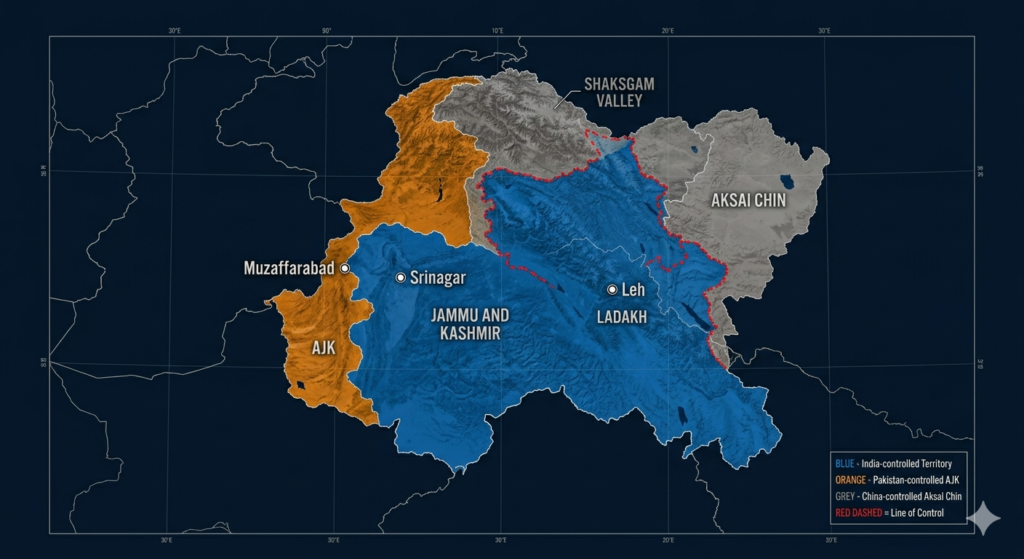
Why Kashmir? Understanding What 78 Years of War Is Actually About
Every India–Pakistan war, from 1947 to 2025, has one common thread: Kashmir. Understanding why requires going back to how two nations were born.
1. The Problem That Partition Created
In August 1947, British India was divided along religious lines — Muslim-majority areas generally became Pakistan, Hindu-majority areas became India. The problem: Kashmir had a Muslim-majority population but a Hindu Maharaja, Hari Singh. Under the logic of Partition, the territory should have gone to Pakistan. But its ruler chose India.
2. What Each Side Wants
For India, Kashmir is a matter of territorial integrity and constitutional principle — a secular democracy that can include a Muslim-majority state. For Pakistan, Kashmir is described as its “jugular vein” — the unfinished business of Partition that will eventually need to be resolved in Pakistan’s favour. For Kashmiris themselves, it is a place where three generations have grown up between two armies, enduring consequences they did not choose.
3. The Line That Neither Side Accepts
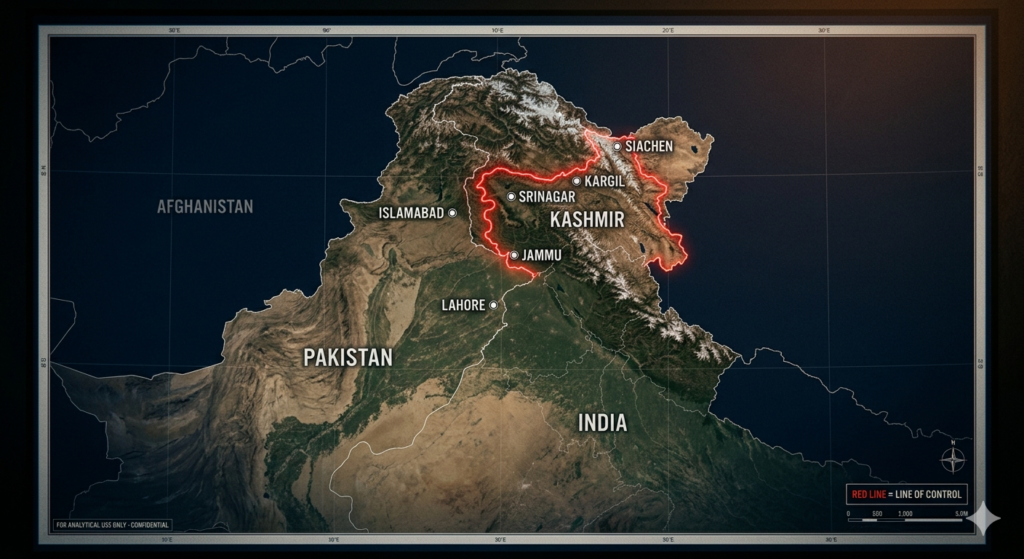
The Line of Control (LoC) — approximately 776 km of heavily militarised border created by the 1949 ceasefire — divides Indian and Pakistani-administered Kashmir. It is neither accepted as a permanent international border nor resolved as anything else. It is, simply, where the armies stopped in 1949. As long as it exists in its current form — as a temporary line that both sides treat as permanent but neither formally accepts — Kashmir will remain the trigger for the next escalation, as it has been for every previous one.
Frequently Asked Questions
How many people died in India–Pakistan wars total?
Across all five major wars, an estimated 33,000–40,000 military personnel died in direct combat. Add the 1947 Partition violence (200,000–2,000,000 civilians) and the 1971 Bangladesh genocide (300,000–3,000,000 people), and the full human cost since 1947 ranges from several hundred thousand to several million. The exact figure cannot be stated with certainty because the most contested events — Partition and Bangladesh — remain subjects of ongoing historical dispute between governments and scholars.
How many Indian soldiers died in the Kargil War?
527 Indian soldiers were killed in the Kargil War (May–July 1999), with an additional 1,363 wounded, per official Indian Ministry of Defence records. India published the name, rank, regiment and home state of every soldier killed — the most precisely documented figure in all India–Pakistan conflicts. Pakistan’s official death toll of 357 is widely considered a significant undercount by independent analysts; estimates range from 700 to several thousand.
How many people died in the 1971 India–Pakistan war and Bangladesh genocide?
The formal 13-day military war (December 3–16, 1971) killed approximately 3,843 Indian and ~9,000 Pakistani soldiers. The Bangladesh genocide (Operation Searchlight, March–December 1971) killed an estimated 300,000 to 3,000,000 Bengali civilians. Bangladesh’s government estimates 3 million; Pakistan’s official position cites 26,000; academic consensus centers around 300,000–500,000. No internationally agreed figure exists.
The surrender of 93,000 Pakistani troops in Dhaka on December 16, 1971 remains the largest military capitulation since World War II.
What happened in Operation Sindoor 2025?
Operation Sindoor was India’s military strike launched on May 7, 2025, following the Pahalgam terror attack (April 22, 2025) which killed 26 civilians in Kashmir. India struck 9 targets in Pakistan and Pakistan-administered Kashmir — its deepest military penetration since 1971. Pakistan retaliated with drones and missiles. A US-brokered ceasefire was announced May 10, 2025. Casualty figures remain disputed pending independent verification.
Who won the India–Pakistan wars?
India won decisively in 1971 (Bangladesh liberation — 93,000 Pakistani POWs surrendered in Dhaka) and 1999 Kargil (recaptured all mountain positions under US-mediated Pakistani withdrawal). The 1947–48 and 1965 wars ended in ceasefire and stalemate — no clear winner. Siachen (1984–present) sees India holding strategic high ground. Operation Sindoor (2025) ended in a ceasefire with both sides claiming victory.
Do India and Pakistan have nuclear weapons?
Yes. Both are nuclear-armed since 1998. India holds approximately 172 warheads; Pakistan approximately 170 (SIPRI 2024). Neither has signed the Nuclear Non-Proliferation Treaty. This nuclear near-parity is the key reason full-scale war has been avoided since 1999 despite multiple military exchanges — including 2019 Balakot and 2025 Operation Sindoor. South Asia is widely considered the world’s most likely nuclear flashpoint.
How many wars have India and Pakistan fought?
India and Pakistan have fought five major wars: the First Kashmir War (1947–48), the 1965 War, the 1971 Bangladesh Liberation War, the Siachen Conflict (1984–present, ongoing), and the Kargil War (1999). Beyond formal wars, significant military exchanges include the 2016 surgical strikes, the 2019 Balakot airstrikes following Pulwama, and the 2025 Operation Sindoor. The 2019 and 2025 events each involved India striking targets inside Pakistan proper — escalating a dangerous new precedent.
Why do India and Pakistan keep fighting over Kashmir?
Kashmir’s conflict originates from 1947 Partition. The Muslim-majority territory was ruled by a Hindu Maharaja who chose to accede to India. Pakistan never recognised this decision. Both countries claim the entire territory. The Line of Control — created by the 1949 ceasefire — divides Kashmir but is not accepted as a permanent border by either side. As long as this remains unresolved, Kashmir will remain the trigger for the next escalation, as it has been for every one so far.
How We Compile This Data — Sources & Methodology
WarCasualties.com does not advocate for any political position regarding India, Pakistan, or the Kashmir dispute. We do not take sides in this or any conflict. Every death recorded here was a human being.
78 Years and Counting — What the Data Actually Tells Us
The numbers in this article — 527, 93,000, 3,843, 300,000 to 3,000,000 — are not abstract statistics. Each represents a human life ended by a conflict that, at its core, began with a line drawn on a map by a British civil servant in six weeks in 1947. Sir Cyril Radcliffe had never been to India before. We are still living with what he drew.
What the casualty data reveals, taken in full, is a pattern: each escalation sets a new precedent. The 1947 war established the LoC. The 1965 war showed both sides the cost of conventional miscalculation. The 1971 war permanently altered the map of South Asia. Kargil revealed the terrifying dynamics of nuclear-armed conventional conflict. The 2019 Balakot strikes breached Pakistan’s territorial integrity for the first time in 48 years. Operation Sindoor in 2025 did it again — deeper and faster.
The 2021 ceasefire was a signal that both governments understood the abyss they were approaching. Its collapse in 2025 was a reminder that understanding the danger and stepping back from it are two different things. India and Pakistan have now fought five wars, conducted nuclear tests, and launched cross-border airstrikes twice in six years — while remaining locked in a dispute over Kashmir that neither side can fully win and neither can afford to lose.
We will update this article as verified data from Operation Sindoor becomes available. The one certainty in this data is that the next update will not be the last.
Share This Research
Help spread verified data — not misinformation